BPC-157/TB-500 Wolverine
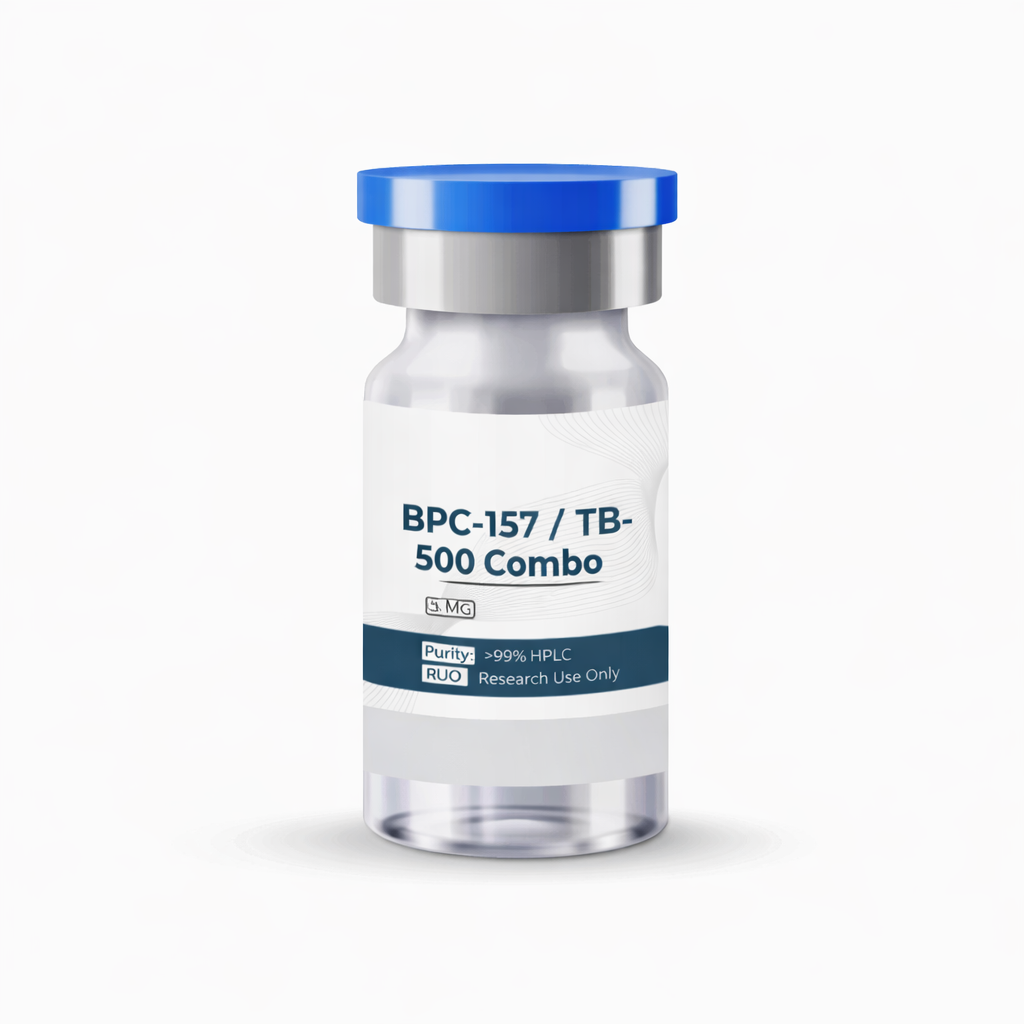
tb 500 and bpc 157 Combination – 10mg, Reagent Grade
Premium blend of BPC-157 and TB-500 peptides (10 mg) formulated for advanced research applications. Frequently studied for their potential synergistic effects in tissue repair, angiogenesis, and cellular recovery. Supplied in lyophilised form for optimal stability. For laboratory research use only.
$110.00 Original price was: $110.00.$100.00Current price is: $100.00.
Guaranteed Safe Checkout
Features & Compatibility
tb 500 and bpc 157– Regenerative Peptide Combination
What is tb 500 and bpc 157?
tb 500 and bpc 157 (Body Protection Compound-157) and TB-500 (Thymosin Beta-4 fragment) are synthetic peptides that work synergistically to promote tissue repair, angiogenesis, and cellular regeneration. Widely investigated in regenerative medicine, sports medicine, and tissue engineering, these peptides have demonstrated potent wound-healing and anti-inflammatory properties in preclinical studies.
Summary Table
| Feature | BPC-157 | TB-500 |
|---|---|---|
| Classification | Synthetic peptide derived from gastric juice protein (BPC) | Synthetic fragment of Thymosin Beta-4 |
| Molecular Formula | C62H98N16O22 | C212H350N56O78S |
| Molecular Weight | 1419 Da | 4963 Da |
| Primary Functions | Gut healing, angiogenesis, tendon & ligament repair | Actin regulation, cell migration, angiogenesis |
| Research Focus | GI protection, musculoskeletal repair, neuroprotection | Wound healing, cardiac repair, musculoskeletal regeneration |
| Mechanism of Action | Enhances VEGF expression, nitric oxide modulation | Regulates actin cytoskeleton, promotes angiogenesis |
Mechanism of Action
-
BPC-157
-
Stimulates angiogenesis through upregulation of Vascular Endothelial Growth Factor (VEGF).
-
Enhances fibroblast migration and collagen deposition for tendon/ligament repair.
-
Exerts cytoprotective effects in the gastrointestinal tract via nitric oxide modulation.
-
Provides neuroprotective activity by supporting dopaminergic and serotonergic signalling.
-
-
TB-500
-
Mimics the activity of Thymosin Beta-4 by regulating the actin cytoskeleton, enabling cell migration and tissue regeneration.
-
Promotes angiogenesis and vasodilation for improved blood supply to injured tissues.
-
Enhances wound repair in skin, muscle, and cardiac tissues.
-
Exhibits anti-fibrotic effects by reducing scar tissue formation.
-
Together, BPC-157 and TB-500 create a synergistic regenerative effect, targeting both structural repair (BPC-157) and cellular dynamics/angiogenesis (TB-500).
Research Applications | tb 500 and bpc 157
-
Orthopaedics & Sports Medicine – Acceleration of tendon, ligament, and muscle recovery.
-
Cardiology – Potential applications in post-myocardial infarction tissue repair.
-
Neurology – Neuroprotection and axonal regeneration in preclinical models.
-
Gastroenterology – tb 500 and bpc 157 for ulcer healing, intestinal protection, and inflammatory bowel disease.
-
Dermatology & Plastic Surgery – Wound healing, scar reduction, and skin regeneration.
-
Experimental Regenerative Therapies – Combination use in trauma, post-surgical healing, and tissue engineering.
Safety & Tolerability
-
BPC-157: Preclinical animal studies suggest high tolerability, with no significant systemic toxicity reported.
-
TB-500: Demonstrated safety in animal and limited human use, though systemic angiogenesis warrants further research.
-
Combination Therapy: The synergistic effect is promising, but clinical validation in humans remains limited.
Commonly Reported Effects in Research Settings:
-
Enhanced tissue repair rates.
-
Increased angiogenesis at injury sites.
-
Reduced inflammation.
-
Minimal adverse effects were observed in preclinical models.
📌 Disclaimer: tb 500 and bpc 157 are research peptides, not approved by the FDA/EMA for medical use. Data primarily derived from animal studies and early experimental trials.
Additional information
Customer Reviews
Related Products
Cagrilintide
Glutathione
NAD+
Reconsitution Solution 5ml

Reviews
There are no reviews yet.