Snap 8 peptide
SNAP-8 Original price was: $37.00.Current price is: $30.00.
Back to products
Bpc 157 tb 500
TB-500 Original price was: $62.00.Current price is: $60.00.

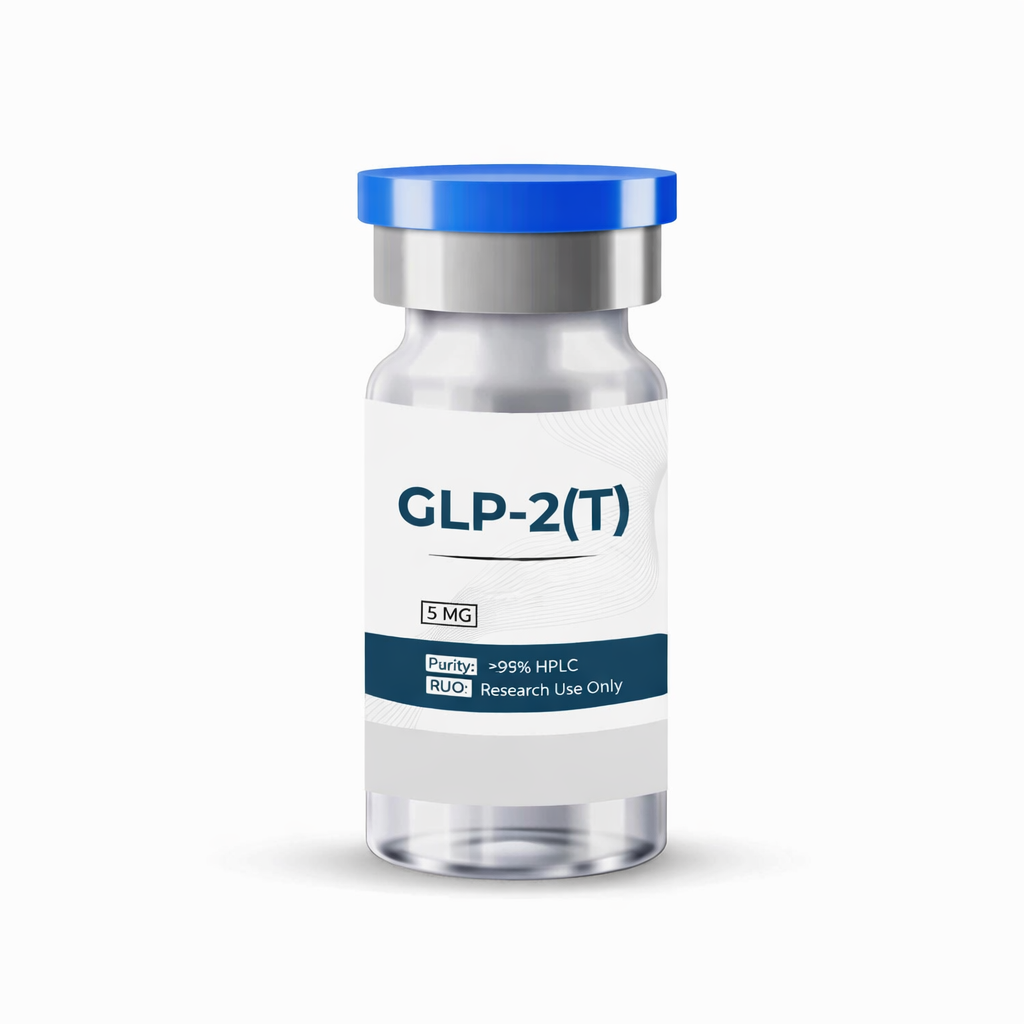
T-GLP2 30mg

T-GLP2 – 10mg, Reagent Grade
Premium 30mg vial of reagent-grade T-GLP2 peptide. Widely researched for its dual incretin activity in metabolic, weight management, and gastrointestinal studies. High purity and consistency, intended strictly for laboratory research use.

Original price was: $160.00.Current price is: $120.00.

Guaranteed Safe Checkout

Features & Compatibility

GLP2 – Dual Incretin Modulator with Gut Trophic Activity

It (30 mg) is a synthetic incretin-based peptide that combines incretin-mimetic activity (dual GIP and GLP-1 receptor agonist) with glucose-like peptide-2  signalling to improve metabolism and intestinal growth/trophic effects. This peptide demonstrates synergistic benefits for glycaemic control, obesity management, and intestinal health within preclinical and laboratory research settings, making it a highly valuable compound for advanced metabolic studies. In controlled research environments, scientists use this peptide to explore how metabolic pathways interact with energy balance, glucose regulation, and fat metabolism, providing deeper insight into obesity-related mechanisms. Its relevance also extends to gut physiology research, where investigators examine intestinal signalling, microbiome interactions, and nutrient absorption processes.

Product Summary – GLP-2 (30 mg)

Parameter Specification
Category Synthetic multi-incretin agonist (GIPR, GLP-1R, GLP-2R); research peptide
Molecular Formula Approx. C₂₁₁H₃₂₀N₅₀O₆₁ (varies with analog modifications)
Molecular Weight ~4813 Da (calculated for GLP2 fusion analogs)
Length ~39 amino acids (GLP-2 analog) + 39 amino acids (GLP2 derivative)
Form & Purity Lyophilized powder; ≥95% purity (HPLC-verified)
Storage Lyophilised at −20°C, protected from light/moisture. The reconstituted solution is stored at −80°C.
Solubility Soluble in sterile water or 0.1% acetic acid

Mechanism of Action

It acts via three receptor pathways:

  1. GIP Receptor (GIPR) → Enhances glucose-dependent insulin secretion and improves β-cell function.
  2. GLP-1 Receptor (GLP-1R) → Reduces glucose secretion, delays gastric emptying, improves satiety, and aids weight reduction.
  3. GLP-2 Receptor (GLP-2R) → Promotes intestinal epithelial proliferation, increases villus height, and enhances nutrient absorption.  Together, these pathways yield:
  • Glycaemic control through GIP/GLP-1 synergy.
  • Appetite regulation and negative energy balance.
  • Enhanced intestinal integrity and barrier function via GLP-2 trophic action.
  • Improved lipid handling and hepatic metabolism through combined incretin receptor signalling.

Research Applications:

  • Metabolic Disease Models
    • Type 2 diabetes mellitus (T2DM): studies on β-cell function, insulin sensitivity, and glucose suppression.
    • Obesity: appetite regulation, weight management, and adipose tissue metabolism.
  • Gastrointestinal & Nutrient Absorption Research
    • Its activity enhances mucosal growth and is used in short bowel syndrome and nutrient absorption studies.
    • Models of intestinal barrier integrity, gut inflammation, and epithelial repair.
  • Liver & Cardiometabolic Outcomes
    • MASLD/NASH: hepatic fat oxidation, improved lipid trafficking.
    • Cardiovascular endpoints via lipid remodelling and anti-atherogenic effects.
  • Neuroendocrinology & CNS Metabolism
    • Hypothalamic signalling of satiety and anorexigenic pathways.
    • Exploratory models in neuroinflammation, cognitive function, and energy balance regulation.
      Additionally, the peptide supports research into endocrine signalling, helping to clarify how hormonal communication influences metabolic homeostasis and stress adaptation. Because of its broad metabolic relevance, this peptide is widely applied in studies focused on metabolism, gut–brain communication, insulin-related pathways, and cellular signalling networks, strictly for non-clinical, in vitro research purposes.

Safety & Tolerability

  • General Profile and Safety Overview
    It and its analogues are widely referenced in scientific literature for their stability and generally favourable tolerance in laboratory and investigative research. From a research safety perspective, the GLP-2 profile is commonly associated with mild gastrointestinal effects, making it suitable for controlled experimental environments when handled correctly. Researchers often evaluate GLP-2 to better understand gastrointestinal signalling pathways, intestinal adaptation, and metabolic responses under non-clinical conditions.

    Potential Negative Effects
    Documented observations in research settings suggest that potential adverse effects may be dose-dependent and include nausea, vomiting, delayed gastric emptying, mild diarrhoea, or abdominal discomfort. Less frequently reported signals include tachycardia and rare pancreatitis-related markers, which are monitored closely during investigative studies to ensure experimental integrity and safety.

    Handling, Storage, and Compliance
    It should always be reconstituted under sterile laboratory conditions and aliquoted appropriately to minimise degradation and avoid repeated freeze–thaw cycles. Compliance is critical: this material is intended exclusively for laboratory and research use and is not approved for human or veterinary therapeutic applications, ensuring adherence to ethical and regulatory research standards.

Additional information

Customer Reviews

Reviews

There are no reviews yet.

Be the first to review “T-GLP2 30mg”

Your email address will not be published. Required fields are marked *