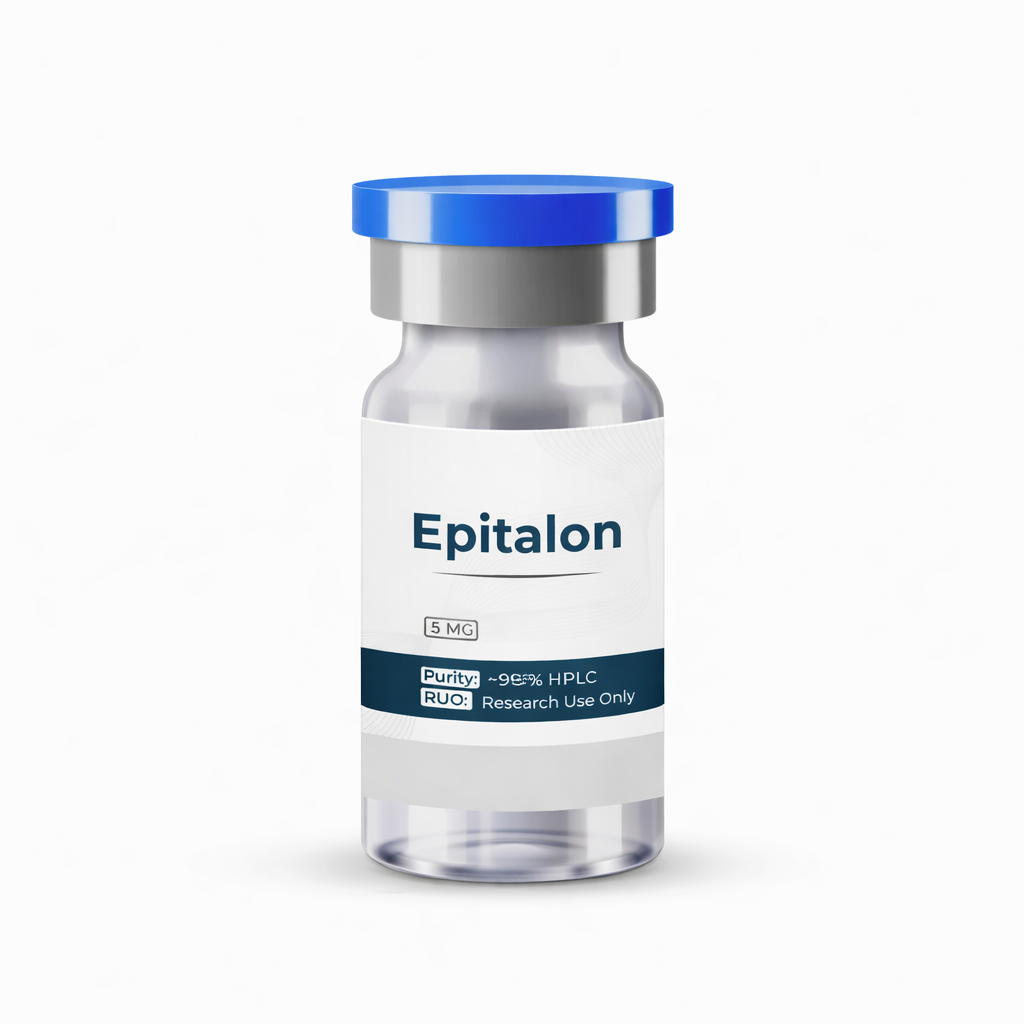
Epitalon
Epitalon dose – 11mg, Reagent Grade
High-purity Epitalon peptide (11 mg) for advanced research use. Extensively investigated for its potential links to cellular longevity, telomerase activity, and oxidative stress regulation. Supplied in lyophilised form to maintain stability. For laboratory research use only.
$38.00 Original price was: $38.00.$30.00Current price is: $30.00.
Guaranteed Safe Checkout
Features & Compatibility
Epitalon dose (Ala-Glu-Asp-Gly)
Epitalon dose (also known as epithalamin or epithalon) is a synthetic tetrapeptide (Ala-Glu-Asp-Gly) that was originally derived from the naturally occurring pineal gland extract epithalamin. It has been studied for its potential anti-ageing, telomerase-activating, and antioxidant properties. Preclinical and early human research suggests its role in promoting longevity, regulating circadian rhythms, and supporting cellular repair processes, making it of great interest to researchers in gerontology, oncology, and molecular biology.
Summary Table
| Field | Details |
| Product Name | Epitalon dose (also known as Epithalon; pineal tetrapeptide) |
| Category | Synthetic tetrapeptide derived from pineal gland extract (Epithalamin); studied as a telomerase-activating, anti-aging peptide |
| Length | 4 amino acids (tetrapeptide) |
| Amino Acid Sequence | Ala–Glu–Asp–Gly (Ala-Glu-Asp-Gly) |
| Molecular Formula & Weight | C₁₄H₂₂N₄O₉; molecular weight ~390.35 Da |
| Form & Purity | Typically supplied as lyophilized powder for research; purity generally ≥95% (HPLC), per vendor specifications |
| Storage | Store dry at –20 °C; reconstituted forms should be refrigerated (2–8 °C) and used promptly |
| Key Mechanisms of Action | – Activates telomerase in human somatic cells, leading to telomere elongation and extended cellular replicative capacity (surpassing Hayflick limit)
– Modulates chromatin: decondenses heterochromatin and activates ribosomal gene transcription in aging lymphocytes – Exhibits antioxidant effects and enhances activity of enzymes like superoxide dismutase and glutathione peroxidase in aged animal models – Demonstrates antitumor/oncostatic effects in rodents: reduces incidence, multiplicity, and metastasis of chemically-induced and spontaneous tumors |
| Research / Clinical Use Cases | – In vitro: Extended lifespan of human fibroblasts by activating telomerase.
– Animal models: Reduced tumour growth/metastases, improved chromosomal stability, restored thymus/thyroid morphology, and extended lifespan under ageing stress. – Human studies: increased telomere length, restored melatonin rhythms, improved retinitis pigmentosa outcomes (~90% response), and reduced chromosomal damage in TB patients. |
| Common AEs / Safety Signals | Generally well tolerated in limited human trials; no adverse effects reported in published clinical reports (e.g., improved markers without toxicity) |
| Contraindications/Warnings | Not FDA- or EMA-approved; long-term safety not established; theoretical concerns around telomerase activation and cell immortalisation. Research use only. |
| Regulatory / Compliance | Available as a research peptide only; not an approved therapeutic. No WADA status noted. Epitalon dose |
Mechanism of Action | Epitalon dose
Epitalon dose primarily acts through telomerase activation, restoring telomere length in somatic cells. This process contributes to delayed cellular senescence and enhanced chromosomal stability. Additionally, Epitalon dose exhibits antioxidant activity by reducing lipid peroxidation and regulating reactive oxygen species (ROS). It also modulates neuroendocrine function, particularly by normalising melatonin secretion, thereby influencing circadian rhythm regulation and age-related hormonal balance.
Research Applications
-
Longevity Studies: Investigated for its role in extending lifespan in animal models via telomere elongation.
-
Gerontology Research: Explored for anti-ageing effects, cellular rejuvenation, and improved quality of life in ageing subjects.
-
Oncology: Studied as a potential adjunct for reducing cancer incidence through genomic stability.
-
Neurobiology: Examined for neuroprotective properties and circadian rhythm regulation.
-
Immunology: Research suggests benefits in modulating immune responses in age-related decline. Epitalon dose
Safety & Tolerability
-
Preclinical Evidence: Animal studies indicate low toxicity and good tolerability at research doses.
-
Human Data: Limited clinical studies report favourable safety, with no severe adverse effects noted.
-
Precautions: Exclusively for research purposes. The long-term human safety profile requires further validation.
-
Handling: For laboratory use only. Not intended for human consumption.

Reviews
There are no reviews yet.