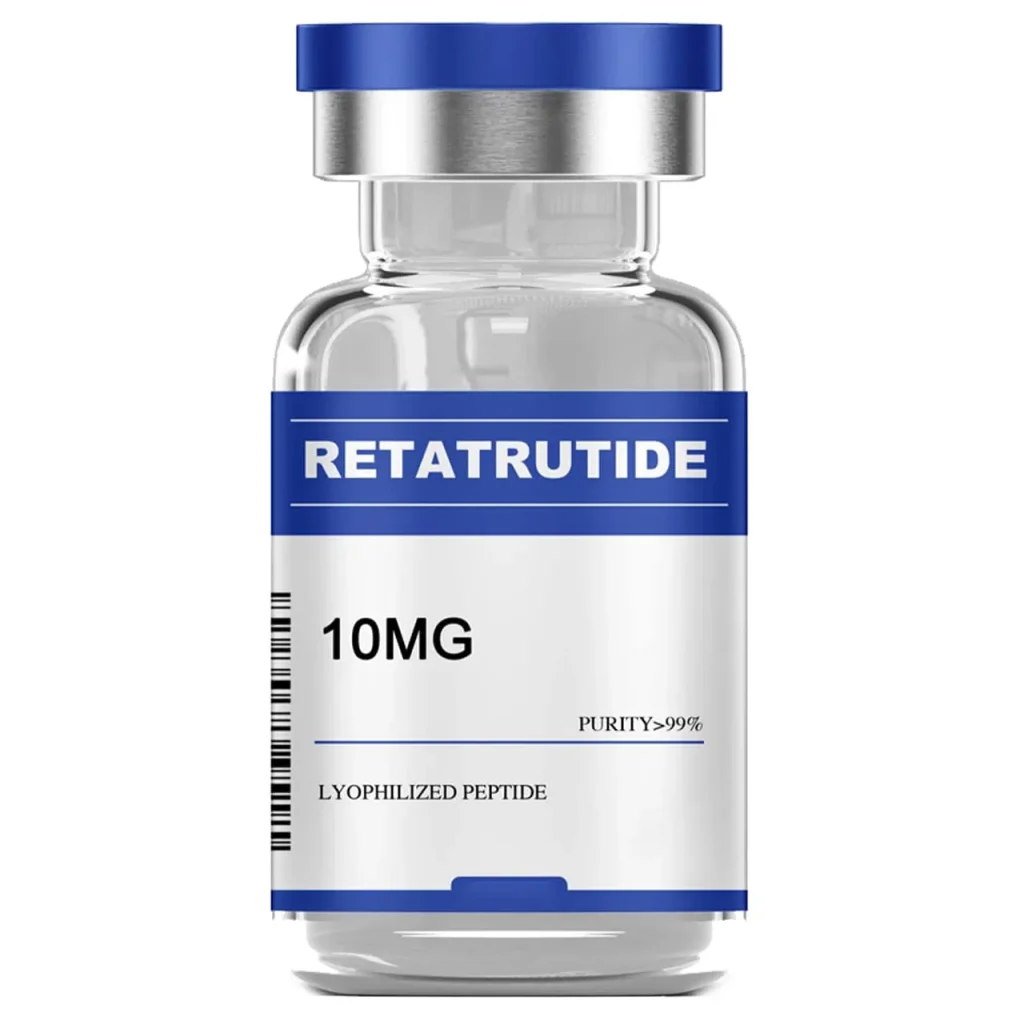
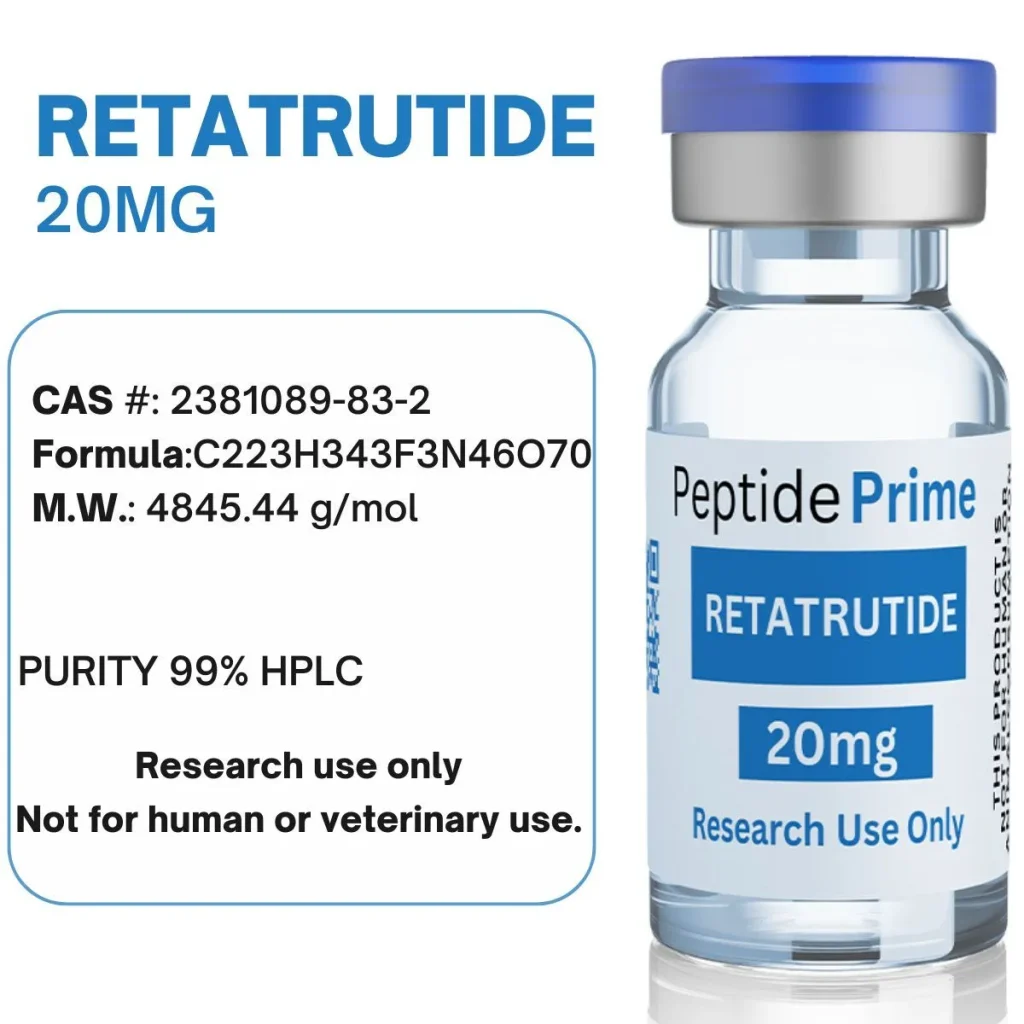
Product Summary – Glp-3 – RT-GLP3 (LY3437943)
| Category |
Synthetic peptide; investigational triple incretin receptor agonist (GIPR, GLP-1R, GCGR) |
| Molecular Formula |
C₁₈₇H₂₉₁N₄₅O₅₉ |
| Molecular Weight |
~4,276.6 g/mol (calculated from sequence and modifications) |
| Length |
31 amino acids |
| Form & Purity |
Lyophilized powder, ≥95% purity (HPLC-verified) |
| Storage |
Store lyophilized at −20 °C, protected from light and moisture. After reconstitution, aliquot and keep at −80 °C to prevent freeze–thaw cycles. |
| Key Mechanisms |
– Activates GIP, GLP-1, and receptors
– Enhances glucose-dependent insulin secretion via the cAMP–PKA pathway
– Reduces release
– Slows gastric emptying & increases satiety (hypothalamic action)
– Increases energy expenditure via receptor co-activation |
| Research Use Cases |
– Chronic weight management & obesity
– Type 2 diabetes mellitus (T2DM)
– MASLD/NASH (liver fat reduction studies)
– Cardiovascular risk reduction
– Renal outcomes (preclinical)
– Neuroprotection & CNS metabolic signaling (exploratory) |
| Compliance |
For research use only. Not for human or veterinary use. |
Molecular Profile
Amino Acid Sequence of Glp-3 (RT-GLP3)
H-Tyr-Aib-Gln-Gly-Thr-Phe-Thr-Ser-Asp-Tyr-Ser-Ile-Leu(Me)-Lys(AEEA-γGlu-C20-diacid)-Ala-Gln-Ala-Ala-Phe-Ile-Glu-Tyr-Leu-Leu-Glu-Gly-Gly-Pro-Ser-Ser-Gly-Ala-Pro-Pro-Pro-Ser-NH₂
Structural Modifications
- Aib: 2-Aminoisobutyric acid (unnatural residue for DPP-4 resistance)
- Leu (Me): α-Methyl-L-leucine (stability enhancement)
- Lys (AEEA-γGlu-C20 diacid): Lysine conjugated to a C20 fatty diacid through a γ-glutamic acid and AEEA linker → extends half-life via albumin binding
- Ser-NH₂ (C-terminus): amidated serine for stability
Mechanism of Action of GLP3 (RT-GLP3)
All three receptors (GIPR, GLP-1R, and GCGR) are class B G protein-coupled receptors to which GLP-3 binds and increases the intracellular cAMP, which further triggers the protein kinase A (PKA) and EPAC pathways.
In pancreatic beta-cells of the islets of Langerhans, RT-GLP-3 enhances the exocytosis of glucose-dependent insulin, while in alpha-cells, it acts on GLP-1R and reduces the release. RT also increases the hepatic glucose output by the GCGR pathways. All these effects combine to improve the glycemic indices. Studies have shown that RT binds to receptors in such a way that it sustains Gs coupling and modulates the arrestin recruitment, resulting in prolonged receptor signalling. [1]
In hypothalamic and brainstem circuits, GLP influences the GLP pathway to reduce appetite by activating anorexigenic neurons and inhibiting orexigenic pathways. RT also targets the vagal afferent pathways to satiety. GCGR activation by RT increases the overall energy expenditure through enhanced substrate oxidation and strong negative energy balance.
In the liver, RT-GLP3 leads to fatty acid oxidation and mobilisation of intrahepatic triglyceride through GCGR pathways. RT also reduces lipotoxicity by rapidly decreasing hepatic fat through the GLP-1R and GIP agonistic effects of RT.
Chronic Weight Management & Obesity
Tritagonists’ effect of RT-GLP3 at GIPR, GLP-1R, and GCGR helps reduce the weight through its negative energy balance caused by anorectic CNS signalling, delayed gastric emptying, increased glucose-dependent insulin secretion, and appetite suppression.
Type 2 Diabetes Mellitus
RT improves the net glycemic control by enhancing the glucose-dependent insulin secretion and decreasing the inappropriate postprandial release, helping to control diabetes.
MASLD / NASH
GLP-3’s effect on hepatic steatosis can be explained as the sum of two mechanistic axes. RT indirectly causes decreased adipose lipolysis and reduced ectopic lipid deposition due to its negative energy balance. By direct activation of GCGR, RT enhances the fatty acid oxidation and alters the VLDL trafficking. In MRI-PDFF studies, patients with non-alcoholic steatohepatitis (NASH) have shown over 70% reduction in some cohorts.
Cardiovascular Effects
Because of the reduced liposity, improvements in glycemic control, and remodeling of atherogenic lipoproteins, RT-GLp helps reduce the cardiovascular disease risks.
Renal Benefits
Kidney benefits are usually from the indirect effects of RT, like amelioration of hyperglycemia, decreased systemic BP, glomerular hemodynamic improvements, and decreased inflammatory and lipotoxic mediators, which lead to albuminuria and progressive kidney injury.
Neuroprotection
RT-GLP3, enhancing the GLP-1R and GIPR signalling, activates the cAMP/PKA and PI3K/AKT pathways, which in turn modulate the neuroinflammatory cascades, improvements in cerebral insulin signalling, and mitochondrial resilience. [1]
Research Applications of GLP-3
RT-GLP3 serves as a probe to investigate multi-receptor incretin biology.
- In vitro studies: human islets to measure insulin and dynamics, cAMP signalling, and Ca²-dependent exocytosis.
- Neurobiology: Electrophysiology and calcium imaging in hypothalamic neurones to map GLP-1R/GIPR-mediated appetite control.
- Hepatic metabolism: Tracer flux studies and indirect calorimetry to quantify substrate oxidation driven by GCGR agonism.
- Clinical mechanistic trials: MRI-PDFF for liver fat, DEXA for body composition, euglycemic clamps for insulin sensitivity, and continuous glucose monitoring for glycemic variability.





Reviews
There are no reviews yet.