

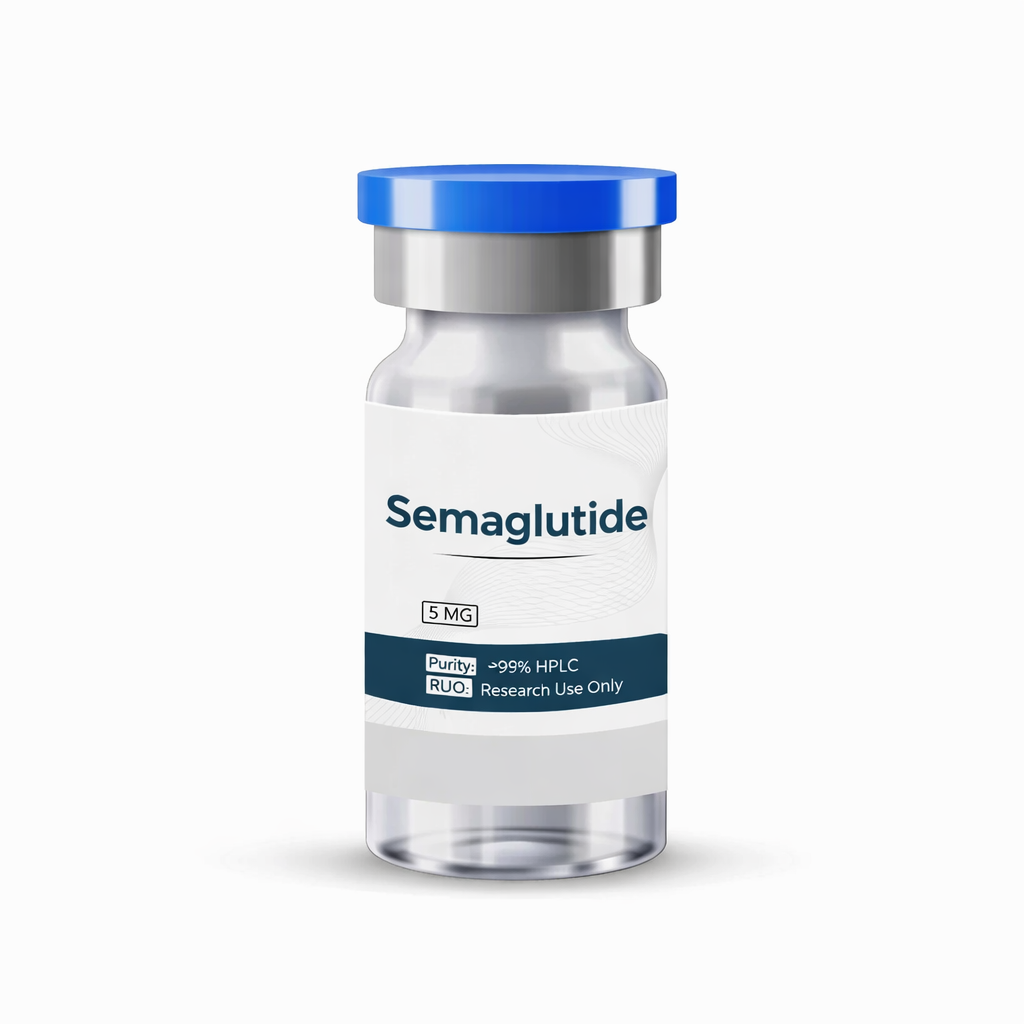
SM-GLP1
M-GLP1 is a long-acting, acylated GLP-1 receptor agonist. It is a 31-amino-acid GLP-1 analogue, investigated for glucose control and chronic weight management. It has approximately 94% sequence homology to endogenous GLP-1. Its structural modifications, like the replacement of alanine with alpha-aminoisobutyric acid at position 8 and the addition of a C18 fatty diacid side chain, increase its plasma half-life.
$59.00 Original price was: $59.00.$50.00Current price is: $50.00.
Guaranteed Safe Checkout

Features & Compatibility
Summary – Product Summary – Glp1 near me
| Category | Details |
| Molecular Formula | C₁₈₇H₂₉₁N₄₅O₅₉ |
| Molecular Weight | 4113.64 g/mol |
| Length | 31 amino acids (GLP-1 analog) |
| Form & Purity | Lyophilized powder, ≥95% purity (HPLC-verified) |
| Storage | Store at −20 °C in lyophilized form; protect from light and moisture |
| Key Mechanisms | – GLP-1 receptor agonism stimulates cAMP–PKA pathway in pancreatic β-cells
– Induces glucagon secretion – Delays gastric emptying – Enhances satiety via hypothalamic signaling |
| Research Use Cases | Investigated in chronic weight management, type 2 diabetes mellitus, neuroprotection, cardiovascular risk reduction, non-alcoholic steatohepatitis (NASH), and renal outcomes |
| Compliance | Research use only; not for human or veterinary use |
Molecular Profile
Amino Acid Sequence of Glp1 near me
H-His-Aib-Glu-Gly-Thr-Phe-Thr-Ser-Asp-Val-Ser-Ser-Tyr-Leu-Glu-Gly-Gln-Ala-Ala-Lys(AEEAc-AEEAc-γ-Glu-17-carboxyheptadecanoyl)-Glu-Phe-Ile-Ala-Trp-Leu-Val-Arg-Gly-Arg-Gly-OH
Structural Modifications
-
- At Position 8: To protect Glp1 near me from degradation by the DPP-4 enzyme, the alanine in native GLP-1 is substituted with α-aminoisobutyric acid (Aib).
- At Position 26: A C18 fatty acid is attached via a spacer (γ-glutamic acid + OEG linker) to allow a strong albumin binding to extend half-life.
- At position 34: Arg34 substitution, which limits undesired acylation
Mechanism of Action of Glp1 near me
dbinds to GLP-1 receptors (GLP-1R) present in the pancreatic islet cells and multiple peripheral and central nervous system tissues. By activating the adenylyl cyclase and increasing the cAMP, Glp1 near me improves glucose handling through the glucose-dependent insulin secretion and glucagon suppression.
GLP-1R activation on the vagal afferents and enteric circuits decreases the energy intake and reduces the postprandial glucose levels by delaying gastric emptying. In the hypothalamus, GLP1 alters the pre-ingestive satiation signals, modulating satiety, appetite regulation, and energy expenditure. It also lowers the de novo lipogenesis by decreasing the expression of lipogenic genes and downregulating SREBP-1c/ChREBP.
Newer studies discuss the trafficking and biased signalling of Glp1 near me According to these studies, GLP1 not only sustained the activation of cAMP/PKA/Epac2 pathways for glucose-dependent insulin release but also reduced the beta-arrestin recruitment to slow the receptor internalisation. [2]
Research Applications
Weight Management and Obesity
GLP1 (SM-GLP1) not only improves glucose regulation but also lowers caloric intake and increases satiety by targeting the multiple levels of appetite and reward regulation. GLP1 shifts the balance towards satiety by activating the POMC/CART neurones and suppressing the AgRP/NPY neurones.
MRI studies showed that GLP1 resulted in reduced activity in the reward-related brain areas, like the nucleus GLP1 and orbitofrontal cortex, leading to decreased food cravings. Recent research also claimed increased thermogenesis after GLP-1 due to brown adipose tissue activation and the metabolic improvements of Glp1 near me.
Non-Alcoholic Steatohepatitis (NASH) Research
Fibrosis is the most clinically relevant outcome in NASH. While GLP1 hasn’t consistently reversed fibrosis, it appears to slow progression. GLP1 reduces hepatic stellate cell activation indirectly by lowering fat accumulation and inflammation.
Investigated in a phase-2 RCT that showed patients with NASH taking a 0.4 mg daily dose resulted in approximately 59% of the NASH as compared to 17% in the placebo. But the trial did not show a significant improvement in the fibrosis stage. [3]
Cardiovascular Research
Cardiovascular benefits of GLP1 (SM-GLP1) are multifactorial. Weight loss due to taking GLP1 lowers the risk of atherosclerotic cardiovascular disease (ASCVD) by haemodynamic and metabolic improvements. However, data indicate that GLP1 also has its weight-independent pathways to act as a cardioprotector. It modulates the vascular inflammation, improves the endothelial function, and reduces the macrophage-driven plaque inflammation. Thus, GLP1 protects the vasculature both by its metabolic and direct anti-inflammatory and anti-sclerotic mechanisms.
Observational reports also noticed that GLP decreased the pro-inflammatory adipokines, such as FABP4, improved the epicardial fat activity, and lowered the circulatory markers that were linked to thrombotic risk. These data suggest that GLP1 therapy is related to reduced acute ischaemic events, MI, or stroke.
The landmark SELECT trial on adults with established ASCVD and obesity without diabetes claimed a relative reduction in the incidence of death from cardiovascular causes, nonfatal myocardial infarction, or nonfatal stroke on taking once-weekly GLP1 of 2.4 mg for about 40 months. [4]
Neuroendocrine & CNS Research
GLP-1Rs are expressed throughout the CNS. These receptors regulate the appetite in the hypothalamus, integrate the visceral inputs in the brainstem, and play a role in cognition and plasticity in cortical and hippocampal regions.
GLP-1 binds to the GLP-1R to promote the transcription of neurotrophic factors such as BDNF and decrease the microglial activation, pro-inflammatory cytokine production, and oxidative stress markers.
In preclinical and translational studies, it has been found that GLP1 modulates neuroinflammation, synaptic function, neurotrophic signalling (BDNF/TrkB), oxidative stress pathways, and cell survival cascades. These multifunctional effects provide a strong basis for the integration of GLP1 into neuroprotection, improvement in the cognitive function, and attenuation of neurodegenerative diseases, like Alzheimer’s disease and Parkinson’s disease.
Renal Research
The benefits of GLP1 have also been observed in the kidneys due to its weight-dependent and weight-independent effects. The weight-dependent effects include decreased intraglomerular hypertension, lowered systemic blood pressure, improved insulin efficiency, and reduced adipose tissue inflammation. All these effects of GLP decreased the progression of chronic kidney disease.
However, preclinical and translational data also discussed the direct GLP-1R-mediated renal mechanisms. GLP-1R agonism regulates the haemodynamics, decreases the renal inflammation, reduces the oxidative stress, and inhibits the profibrotic signalling in the kidneys.
Safety & Tolerability
Common Side Effects of GLP-1
Many users face the symptoms of nausea, vomiting, diarrhea, constipation, or abdominal pain after taking GLP1 . These side effects are observed to increase transiently with increasing the dose but mitigate with continual therapy or slower titration.
Rare Side Effects
- Acute Pancreatitis: Although acute pancreatitis is not an established side effect of Glp1 near me by a large excess risk, a few users may have it. [5]
- Gallbladder-related diseases: Studies have shown that GLP sometimes increases the incidence of biliary colic, cholelithiasis, and cholecystitis because of rapid weight loss and altered gallbladder motility [6]
- Acute kidney injury (AKI): Volume depletion due to severe vomiting and diarrhea can sometimes cause AKI.
- Diabetic retinopathy: SUSTAIN-6 claimed that rapid improvement in glycemia with GLP-1Rs transiently worsens diabetic retinopathy. Studies have noticed that GLP has been associated with early retinopathy-related complications in those patients who were already suffering from severe retinopathy. [7]
Reviews
There are no reviews yet.